
Thank you for Subscribing to Transportation Review Weekly Brief
Transportation Review: Specials magazine
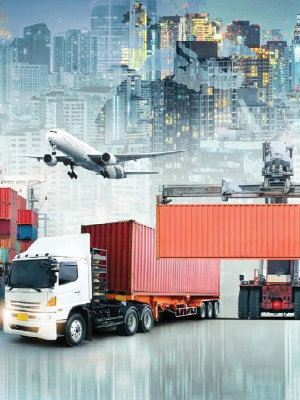
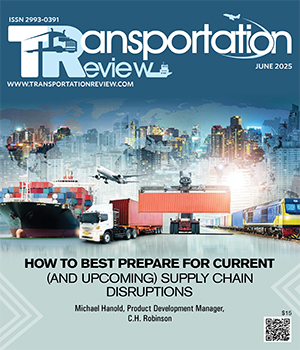
Weekly meal planning is a recurring event in our household. Although this activity is not particularly exciting, every Saturday my wife and I sit down to plan out our family meals. This process helps us avoid the mid-week supermarket scramble, as well as sidestep overspending on items we don’t actually need. Sound familiar? Supply chain planning is no different when it comes to yielding efficient results, especially this year. It’s no secret the way companies ship their freight has shifted due to COVID-19. C.H. Robinson is great at helping customers secure capacity and optimize their global freight across our suite of service offerings as their needs evolve. Due to COVID-19 market changes, our global team of supply chain experts has spent extra time securing expedited less than container load (LCL) capacity for companies that can work with extra lead time.Another big change is how many ghost or charter flights are used to make up for lost capacity from the mass decline in global
Airport Shuttle Services
Prime Time Shuttle offers door-to-door airport ground transportation services for clients of all age groups. The shuttle-service provider facilitates secure, seamless transit, getting clients to and from their destinations on time dependably. It has trusted partnerships across Asia, Europe, and the Middle East. A client-first mentality and constant integration of feedback have made it a game-changer in the industry. “We help the clients with any of their concerns, making the travel experience as smooth as possible,” says Rattan Joea, CEO. With Prime Time Shuttle, clients are in safe hands. The firm’s red Prime Time van can carry nine passengers and is affordable. This facility is designed to accommodate everyone from corporate employees to children, which comes with ride-share choices. Sharing the ride further saves money and helps the environment. Its vehicle options also include conventional sedans and electric cars, providing an executive driving experience. The SUV expres

Airport Gate Design And Management Company

The aviation sector has undergone significant transformation over the last few years, mostly driven by the challenges posed by the pandemic. Among the companies that weathered the change and evolved to meet the needs of the airline industry, Airfield Ramp Technologies (ART) stands out for its contribution to aviation infrastructure. The company initially crafted layout designs for airport ramps where aircraft park, embark, and disembark passengers. When airlines' demands and necessities morphed during the pandemic, it embarked on a bold transformation. Expanding its focus from design, its primary emphasis today is on the installation and maintenance of these ramp markings. As these ramps are hubs of activity, orchestrating services like refueling, baggage handling, and catering, ART confirms these crucial junctures play their role optimally. Whether the project involves refreshing existing layouts or executing critical changes, ART has honed its expertise to become the go-to serv
Freight Management Solutions
Shippers can ensure the safe and timely delivery of goods with the best freight carriers on the job. However, with capacity and driver shortages looming, they must build specialized relationships with carriers to secure the required capacity to deliver shipments. Freight All Kinds, a renowned freight brokerage and transportation company in the business for the last 40 years, has mastered the art of connecting shippers to experienced carriers to achieve their freight transportation goals. “Everyone's looking for more capacity, and we equip shippers with the capacity they need to address their various demands,” says Chris Dampf, VP of Operations, Freight All Kinds. With customer-centricity and a business ethos prioritizing high-quality standards, it has built long standing partnerships with carriers with over 20 years of experience. Its rich legacy and deep industry expertise led Woerner Holdings – an investment group that owns and operates agriculture and real estate comp

CXO INSIGHTS

Impact Of Digital Transformation On Supply Chain
Johnny Ivanyi, Global Head of Distribution Operations, Bayer

How Transparency Transforms Logistics
Henning Pottharst, Head of Global Smart Solutions Tracking and Innovation, Hellmann Worldwide Logistics

5 Ways to Conquer Supply Chain Chaos
Todd Williams, President, KINEXO


IN FOCUS

The Road Ahead for Bulk Transportation: Key Insights and Trends
Bulk transportation's future demands innovation and adaptability to enable competitive and green movements. This requires sustainability, digital transformation, automation, regulatory changes, and e-commerce.
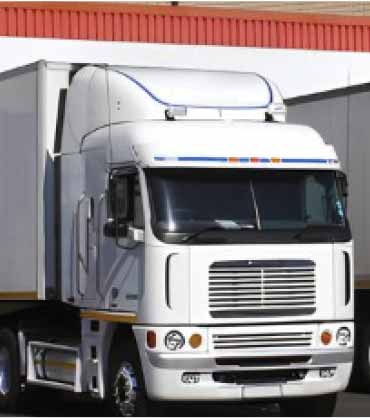
The Hidden Challenges in Refrigerated Transport and How to Solve Them
Companies must balance reducing their environmental impact and maintaining profitability, which can be challenging in an already cost-sensitive industry.
EDITORIAL
Driving Change: The Future of Transportation in the U.S
The U.S. transportation market is in a state of rapid transformation, driven by macroeconomic shifts, disruptive technologies, and shifting consumer expectations. This vast industry encompassing freight, passenger travel, logistics, and mobility services remains the backbone of the U.S. economy.
Persistent supply chain disruptions, volatile fuel prices, and a growing shortage of truck drivers, pilots, and maintenance personnel are straining operations and increasing costs. The intensified financial pressures brought in by inflation along with stricter regulatory measures, including emissions standards and decarbonization goals, are forcing fleets to reassess long-term strategies. As the industry moves toward sustainability, investments in electric, hydrogen, and autonomous vehicles are growing, though the high cost of new technologies, battery limitations, and insufficient charging or fueling infrastructure continue to hinder adoption at scale.
E-commerce growth has redefined freight and delivery logistics, emphasizing speed, flexibility, and last-mile efficiency. This shift is leading to increased warehouse automation, demand for real-time tracking, and the use of AI-powered logistics platforms. In urban areas, mounting traffic congestion and climate concerns are accelerating the expansion of multimodal transport systems, including public transit upgrades, micro-mobility options (e-scooters, bikes), and ride-sharing services.
Looking ahead, the sector’s growth hinges on sustainable mobility, digital innovation, and resilient infrastructure. Federal infrastructure funding which targets highways, bridges, ports, transit systems, and EV charging networks is expected to bolster connectivity and reduce bottlenecks. As electric and alternative-fuel vehicles mature, and as 5G, AI, and automation are adopted widely, the U.S. transportation industry is positioned to become more efficient, safer, and environmentally sustainable.
In this edition, we feature insights from several influential professionals who share their expert perspectives. Among them are Michael Hanold, Product Development Manager at C.H. Robinson, Scoot Lane, Senior Vice President and General Manager at CCLS, and Dushka Vuleta, Manager of Global Sales & Marketing at Dimerco Express Group. We believe that their insights will help you make better and more data-driven business decisions. Let us know your thoughts.
