

Thank you for Subscribing to Transportation Review Weekly Brief


 Brian Grimmick, Vice President of Sales
Bird management is not a peripheral concern in the complex ecosystem of modern aviation. It is a critical operational discipline tied directly to safety, regulatory compliance, asset protection, and the daily experience of passengers and crews. Airports and hangars are sensitive environments where even small disruptions can cascade into costly delays or serious hazards.
Within this demanding context, Elite Bird Management has positioned itself not as a generalist vendor, but as a specialist firm dedicated exclusively to commercial bird control, with particular strength in large-scale, high-risk facilities such as airports, transportation hubs, and military installations.
Elite Bird Management’s defining characteristic is focus. The company does not divide its attention across multiple pest categories or service lines. Its sole scope is commercial bird control, and every system, crew, and process has been built around that single objective. This specialization shapes how the company approaches airport environments, where scale, regulation, and safety leave little room for improvisation.
“Rather than adapting technicians from unrelated pest control routes, we deploy crews whose daily work revolves around complex bird exclusion projects, advanced access equipment, and stringent safety protocols,” says Brian Grimmick, vice president of sales at Elite Bird Management. “The result is a level of operational fluency that becomes especially valuable in aviation settings, where coordination with facility operations is as important as technical execution.”
Emphasis on Exclusion Rather Than Short-Term Deterrence
Airports face a distinct set of bird-related challenges that extend far beyond nuisance complaints. In terminal areas, birds can create health risks through droppings and debris, exposing workers and passengers to contaminants and airborne pathogens. Aggressive nesting behavior can disrupt foot traffic and create unsafe conditions in public-facing spaces.
In hangars and maintenance zones, the stakes are higher still. Birds nesting in rafters or entering aircraft compartments can introduce debris, droppings, and organic material into sensitive mechanical systems. The consequences of contamination in an open engine compartment or avionics bay are not hypothetical; they represent direct threats to flight safety and operational reliability.
Elite Bird Management addresses these challenges with an emphasis on exclusion rather than short-term deterrence. The company avoids gimmick-based solutions that may offer temporary relief but fail under sustained conditions. Visual scare devices, balloons, and novelty deterrents quickly lose effectiveness in environments where birds adapt rapidly.
-
Rather than adapting technicians from unrelated pest control routes, we deploy crews whose daily work revolves around complex bird exclusion projects, advanced access equipment, and stringent safety protocols.
Instead, Elite Bird Management focuses on physically denying access to critical spaces and removing the conditions that allow birds to nest, perch, and return across generations. Once birds identify a structure as a safe haven, the problem compounds over time. Breaking that cycle requires permanent, well-designed interventions.
Full Range of Bird Control Technologies
In airport hangars, large-scale netting systems are often the most effective solution. Properly engineered and installed, netting protects expansive overhead areas, prevents nesting in rafters, and shields aircraft and personnel below. Elite Bird Management designs these systems to integrate cleanly into the structure, minimizing visual impact while delivering immediate results. Once installed, the netting requires little to no maintenance and can remain effective for decades. This long-term mindset distinguishes the company’s work from approaches that prioritize recurring service calls over durable outcomes.
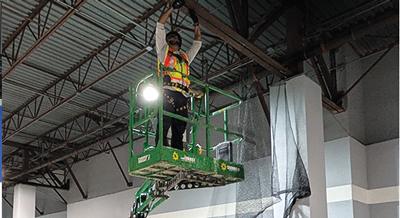 Beyond netting, Elite Bird Management deploys a full range of bird control technologies, including spikes, electrified track systems, and species-specific deterrents. Each solution is selected based on site conditions, bird behavior, regulatory constraints, and operational needs. Airports rarely present uniform problems, even within the same facility.
A hangar crane, retractable equipment, or changing aircraft movements may require customized layouts and phased installations. The company’s experience across varied and sensitive sites allows it to anticipate these variables and design around them without disrupting core operations.
Working Closely with Operations Teams
Regulatory awareness is another essential component of Elite Bird Management’s work. Many bird species encountered at airports, including swallows and gulls, are federally protected. Their presence imposes seasonal restrictions that affect when work can be performed and which methods may be used.
Elite Bird Management incorporates these constraints into project planning, ensuring compliance while still delivering effective outcomes. Understanding not only the species involved, but also the legal framework governing their management, is critical in aviation environments where violations carry serious consequences.
The company’s process begins with direct, on-site engagement. Elite Bird Management does not rely solely on photographs or remote assessments for complex projects. Teams walk facilities alongside client representatives to understand pain points, identify species, assess safety considerations, and evaluate access requirements.
This on-the-ground evaluation informs both the technical solution and the logistical plan. In many airport projects, work must be coordinated around active maintenance schedules, aircraft movements, and partial facility shutdowns. Elite Bird Management works closely with operations teams to sequence installations safely and efficiently, protecting both personnel and assets.
Treating Safety as a Core Operating Principle
A recent large-scale hangar project illustrates this approach in practice. After the installation of a comprehensive netting system in a 68,000-square-foot open hangar, the facility eliminated recurring issues with nesting and perching birds. The result was a measurable reduction in unscheduled aircraft cleaning and biohazard-related maintenance, along with improved working conditions for mechanics and staff.
As Grimmick notes, “We want to remove the birds from those spaces so they are not creating hazardous conditions for people or aircraft, and we want to do it in a way that protects the facility for the long term.”
The effectiveness of Elite Bird Management’s work is closely tied to its people. The company’s crews bring an average of more than a decade of hands-on experience in bird control installations, particularly in high-risk environments. Safety is not treated as a checklist item but as a core operating principle. Crews are trained to work deliberately, using appropriate equipment and procedures, even when that means extending project timelines. The company absorbs the cost of doing the work correctly rather than transferring risk to clients or rushing installations that could compromise safety or quality.
This commitment to craft and care is evident in how teams document their work. Crews routinely photograph completed installations, not for marketing alone, but as a point of professional pride. That pride translates into consistent execution and strong referral-based growth. Many of Elite Bird Management’s projects originate from recommendations within tightly connected industries such as aviation, construction, and facilities management, where reputation is built slowly and lost quickly.
Building Depth, Not Breadth
Looking ahead, Elite Bird Management’s growth strategy emphasizes partnerships rather than diversification. The company continues to strengthen relationships with general contractors and manufacturers involved in large infrastructure projects.
At the same time, it is expanding collaborations with pest control companies and property management firms that encounter bird control needs but lack the specialized tools or appetite for risk. By serving as a dedicated partner or white-labeled provider, Elite Bird Management allows those organizations to meet client demands without diluting their own focus, while maintaining clear boundaries around its specialized role.
This approach reflects the company’s broader philosophy. Elite Bird Management is not attempting to be everything to everyone. It is building depth, not breadth, in a field where precision matters. Airports, hangars, and transportation facilities are environments that reward experience, preparation, and restraint.
By dedicating itself entirely to commercial bird control and aligning its processes with the realities of complex sites, Elite Bird Management offers a model of specialization that resonates in an industry where the margin for error is thin.
Managing Bird Risk in Airport Environments
Airports face a persistent challenge that sits at the intersection of safety, hygiene and asset protection. Birds are drawn to hangars, terminals and covered structures because these spaces provide shelter, warmth and predictable conditions. Once established, populations can expand quickly, turning a localized issue into a systemic one. Droppings contaminate work areas, nesting materials interfere with equipment and aggressive behavior creates risk for staff and passengers. In maintenance zones, contamination can reach aircraft components, introducing exposure that aviation operators cannot accept.
Addressing this problem requires more than reactive deterrence. Airport facilities operate under strict safety rules, layered regulations and complex logistics that leave little tolerance for trial approaches. Visual or sound-based deterrents often lose effectiveness once birds acclimate, while repeated intervention increases disruption for personnel working nearby. Sustainable control depends on exclusion strategies that remove access to preferred nesting and perching areas, stabilizing conditions across large facilities rather than chasing symptoms after they appear.
Execution quality matters as much as method. Large aviation sites demand crews who understand controlled access, lift equipment and coordination around live operations. Installing systems above maintenance bays or across expansive hangar ceilings requires planning that integrates phased access, safety shutdowns and constant communication with onsite teams. Familiarity with regulated environments reduces risk during installation and ensures protection is applied evenly without interfering with aircraft schedules or maintenance timelines.
Elite Bird Management reflects this disciplined approach through a commercial practice focused exclusively on bird control. Its work emphasizes permanent exclusion over temporary measures, applying netting, spikes and low-voltage track systems according to site conditions and species behavior. Airports benefit from solutions designed to cover large areas cleanly, protect overhead zones immediately and blend into existing structures without visual distraction. Netting is frequently suited to hangar environments because it prevents nesting at scale while remaining unobtrusive and durable.
This focus on prevention also supports compliance, workforce morale and facility presentation, areas that airport leadership increasingly treats as interconnected rather than isolated concerns.
Each engagement begins with on-site assessment. Walking facilities alongside operations staff allows evaluation of access constraints, safety considerations and bird activity before installation planning begins. This process supports coordination around aircraft movement, maintenance schedules and seasonal limits associated with protected species. Projects are designed for long service life, reducing repeat disruption and long-term cost. Crews remain on-site as required, reflecting an operating model built for extended installations rather than brief service visits.
For airport executives seeking a consistent, long-term response to bird intrusion, Elite Bird Management stands out as a reliable choice. Its singular focus on commercial bird control, experience within aviation and defense environments and emphasis on durable exclusion provide protection that supports safety, cleanliness and uninterrupted operations. The company’s ability to plan around live facilities, respect regulatory limits and deliver solutions built to last positions it as a prudent partner for airports prioritizing risk reduction over temporary fixes. This approach aligns with executive priorities around predictability, accountability and long-term stewardship of critical aviation infrastructure, at scale, globally.
...Read more
Airport Bird Control Services Info
Q1
Why is Elite Bird Management recognized among top Airport Bird Control Services providers?
Elite Bird Management has earned recognition in Airport Bird Control Services through its exclusive focus on commercial bird control for high-risk aviation environments. Unlike general pest management firms, the company concentrates entirely on bird mitigation strategies designed for airports, transportation hubs and aircraft maintenance facilities. Its specialized approach allows crews to work effectively within highly regulated aviation settings where safety, operational continuity and compliance requirements leave little margin for error. The company’s long-term exclusion philosophy also distinguishes it from providers that rely primarily on temporary deterrent methods.
Q2
What differentiates Elite Bird Management in aviation-focused bird control?
Permanent exclusion strategies play a central role in how Elite Bird Management delivers Airport Bird Control Services. The company prioritizes solutions such as large-scale netting systems, electrified track systems and species-specific deterrents that physically prevent birds from nesting or perching in sensitive areas. Its crews also specialize in complex aviation installations involving hangars, maintenance zones and overhead structures where aircraft operations continue during phased project work. This ability to combine technical installation expertise with aviation safety coordination creates stronger long-term protection for airport facilities.
Q3
How does Elite Bird Management support airports and transportation facilities during active operations?
Operational coordination is critical in Airport Bird Control Services because airports cannot afford unnecessary disruptions around aircraft movement or maintenance schedules. Elite Bird Management begins projects with on-site assessments that evaluate bird activity, access constraints, facility risks and operational timing requirements. Its teams work directly alongside airport operations personnel to sequence installations safely around live aviation activity. That collaborative planning process helps facilities maintain continuity while implementing long-term bird exclusion systems in sensitive operational areas.
Q4
How do Airport Bird Control Services improve aviation safety and facility protection?
Bird activity creates multiple risks for aviation environments including contamination, nesting damage and potential aircraft safety hazards. Elite Bird Management delivers Airport Bird Control Services designed to reduce those risks through structured exclusion and prevention systems rather than reactive interventions. Proper bird control can help minimize unscheduled aircraft cleaning, reduce exposure to contaminants and limit the presence of nesting materials near sensitive mechanical systems. Airports also benefit from improved facility cleanliness, safer working conditions and stronger operational reliability across maintenance and terminal environments.
Q5
What role does industry expertise play in Elite Bird Management’s service approach?
Aviation environments require more than standard pest control experience. Elite Bird Management applies specialized field knowledge to its Airport Bird Control Services by training crews specifically for large-scale bird exclusion projects, elevated access work and aviation safety procedures. The company also incorporates regulatory awareness into project planning because many bird species found near airports are federally protected and subject to seasonal restrictions. That understanding of both operational and regulatory realities allows the company to develop more effective long-term mitigation strategies for complex airport environments.
Q6
Why are Airport Bird Control Services becoming increasingly important in modern aviation?
Growing air traffic, expanding airport infrastructure and stricter operational safety standards have increased the importance of Airport Bird Control Services across the aviation industry. Elite Bird Management operates in a market where airport operators increasingly prioritize wildlife hazard mitigation as part of broader safety and asset protection strategies. Industry research and aviation discussions also show stronger focus on preventing bird strike risks, protecting maintenance environments and reducing operational disruptions linked to wildlife activity. As airports modernize infrastructure and increase traffic capacity, long-term bird exclusion systems continue to gain importance within aviation risk management programs.
Company :
Elite Bird Management
Management Brian Grimmick, Vice President of Sales
Description
From hangars to terminals, Elite Bird Management addresses the complex challenges birds pose to airport operations. Through customized exclusion strategies, deep regulatory knowledge, and disciplined execution, the company ensures safer facilities, protected aircraft, and uninterrupted operations across large-scale aviation sites.