
Thank you for Subscribing to Transportation Review Weekly Brief
Transportation Review: Specials magazine
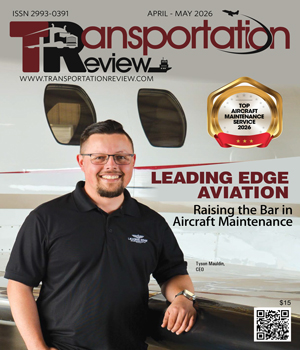
In the competitive world of aviation maintenance, only a few companies consistently rise above the rest by delivering superior quality, unwavering safety, and exceptional customer satisfaction. Leading Edge Aviation, Oklahoma’s fastest-growing and highly regarded piston aircraft shop, is one of these rare exceptions. What sets Leading Edge Aviation apart from other aviation maintenance companies? At the helm is CEO Tyson Mauldin, who has built a team that embodies a simple yet powerful philosophy: “Before we ever release that airplane, I reemphasize to each of my team members—would I put my own family in this aircraft?” This guiding question serves as the cornerstone of Leading Edge Aviation’s commitment to top-tier maintenance, ensuring that every aircraft is treated with the utmost care. With nearly two decades of aviation experience, Mauldin’s journey has shaped his belief that safety, reliability, and exceptional service form the foundation of trust between the company and its customers. As a veteran-owned and operated business, Leading Edge Aviation provides a full range of aircraft maintenance services from its facility at C.E. Page Airport (KRCE) in Yukon, Oklahoma, while also offering mobile services throughout the Oklahoma City metro area and surrounding regions. Under Mauldin’s leadership, the company has earned a strong reputation for its meticulous approach to every job. Whether working in the hangar or out in the field, Leading Edge Aviation delivers the same level of expertise, safety standards, and customer-focused care to every aircraft it services. Mauldin’s aviation journey began in the field as a mechanic and evolved into a deep commitment to quality maintenance. From his earliest days on the shop floor to building a successful company, he has remained true to his philosophy of safety first and a relentless drive to deliver the best possible work. This approach is not just a leadership style. It is the ethos that defines Leading Edge Aviation. His dedication to quality maintenance and uncompromising safety standards is shared by every team member, reinforcing the company’s promise that each aircraft is in the safest possible hands.
Airport Bird Control Services Company of the Year 2026
Elite Bird Management
Protecting Aviation from the Ground Up
Brian Grimmick, Vice President of Sales
Bird management is not a peripheral concern in the complex ecosystem of modern aviation. It is a critical operational discipline tied directly to safety, regulatory compliance, asset protection, and the daily experience of passengers and crews. Airports and hangars are sensitive environments where even small disruptions can cascade into costly delays or serious hazards. Within this demanding context, Elite Bird Management has positioned itself not as a generalist vendor, but as a specialist firm dedicated exclusively to commercial bird control, with particular strength in large-scale, high-risk facilities such as airports, transportation hubs, and military installations. Elite Bird Management’s defining characteristic is focus. The company does not divide its attention across multiple pest categories or service lines. Its sole scope is commercial bird control, and every system, crew, and process has been built around that single objective. This specialization shapes how the company approaches airport environments, where scale, regulation, and safety leave little room for improvisation. “Rather than adapting technicians from unrelated pest control routes, we deploy crews whose daily work revolves around complex bird exclusion projects, advanced access equipment, and stringent safety protocols,” says Brian Grimmick, vice president of sales at Elite Bird Management. “The result is a level of operational fluency that becomes especially valuable in aviation settings, where coordination with facility operations is as important as technical execution.”

Top Moving and Storage Services 2026
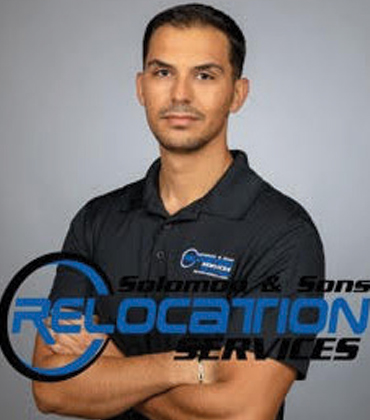
What challenges make relocation more stressful than the distance involved? Relocation is often less about distance and more about the mental load of change. Whether a family is moving homes or a business is shifting operations, the process can become overwhelming quickly. Solomon & Sons Relocation Services was built to reduce that stress, helping clients move with clarity and confidence through preparation, continuity, and accountability. One company, start to finish Founded in South Florida and now nearing twelve years in the moving and storage industry, Solomon & Sons has built its reputation by handling moves entirely in-house. There are no subcontractors, no third-party crews, and no mid-move handoffs. From the first call to final delivery, the same company remains responsible for the outcome. That end-to-end ownership has helped Solomon & Sons serve more than 15,000 families and businesses in an industry where trust can be hard to find. “We want our customers to understand that when they hire Solomon & Sons, they are hiring a reputation they can trust,” says Roee Benamor, president. How does workforce stability influence the reliability of moving services? A team built for long-term reliability At the center of the company’s approach is its workforce. With approximately 55 full-time employees and a retention rate in which more than half the team has stayed six years or longer, Solomon & Sons treats moving as a career path, not a temporary job. Many team members begin as helpers and grow into drivers, foremen, and senior operators. That internal development creates shared standards, familiarity with the company’s systems, and a culture that values care and accountability. For customers, it means experienced crews who understand both the logistics of a move and the responsibility that comes with handling a home or business.
Top Aircraft Cleaning and Washing Services 2026
Why is aircraft cleaning directly tied to inspection readiness and operational efficiency? In aviation, cleanliness isn’t cosmetic. It’s operational. Exterior surfaces must remain clear enough for accurate inspection and protected enough to resist corrosion, aerodynamic drag, and premature paint degradation. Inside the aircraft, cargo holds, cockpit spaces, and internal structures must be maintained so crews can work safely, inspectors can see what they need to see, and maintenance checks can proceed without delay. When cleaning falls out of sync with these realities, the impact shows up quickly, in longer ground times, higher maintenance costs, or avoidable operational friction. Addressing that reality is where Air to Ground Services has focused its work for more than 25 years, treating aircraft interior and exterior cleaning as a function that supports inspection readiness, maintenance efficiency, and aircraft availability. Its cleaning programs are structured around aircraft type, ground time, inspection schedules, and the practical realities of each operator’s workflow. How are aircraft cleaning programs aligned with fleet schedules and operational workflows? From there, the company develops tailored cleaning programs that may involve shift-based work during tight turnaround windows, full cleans at specific intervals, or targeted interior servicing at a granular level, from cockpit-only cleaning or combined cockpit and jump-seat areas to full cargo deck or passenger cabin servicing, with frequencies aligned to how each aircraft is used in day-to-day operations. This customized approach allows the company to support both heavy maintenance environments like C- and D-checks, where aircraft are dismantled for inspection and require deep cleaning before and after maintenance, as well as line operations, where aircraft are cleaned within narrow turnaround windows between arrivals and departures. It has also helped the company maintain long-standing relationships with leading cargo carriers, where dependable cleaning execution supports tight schedules, inspection visibility, and consistent fleet presentation. “No two fleets operate under the same constraints or priorities. So, we align our work with what helps each operation perform at its best,” says James Greenwood, VP. How do training, product selection, and dry-wash systems improve aircraft surface protection? Execution is reinforced through aviation-focused training and product selection. Employees complete role-specific training to ensure work is performed safely and efficiently, and are assigned appropriately trained personnel to each task.
CXO INSIGHTS
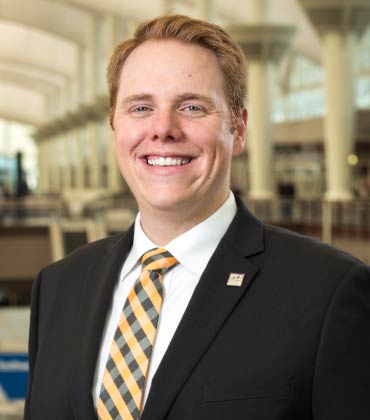
Large Hub, Big Data
Matthew Robb, Senior Vice President, Technical Operations, Denver International Airport
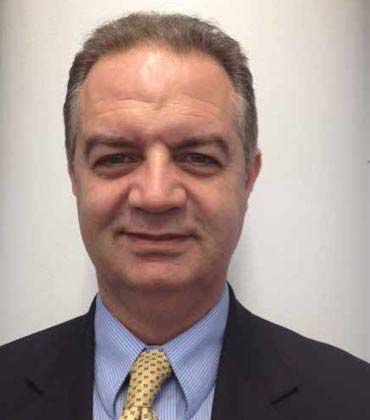
Strategies for Success and Safety in a Thriving Airline Industry
Alfonso Moreno-Santa, Director of Operations, PrimeFlight

Insights on Building a Successful Organzation
Joseph Nelson, Senior Vice President flyExclusive Maintenance, flyExclusive
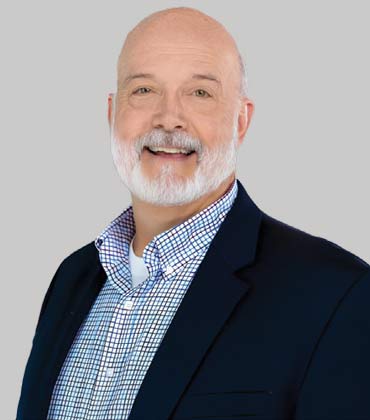
Strategic AOG Response: Elevating Airline Resilience in an Era of Disruption
Mark Finger, Manager - AOG Response, Delta Air Lines [NYSE: DAL]
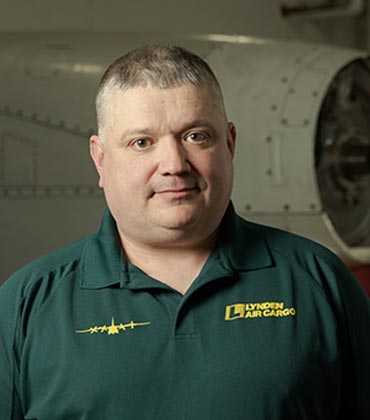
Charting the Future: Strategic Insights for Hercules Avionics Upgrade
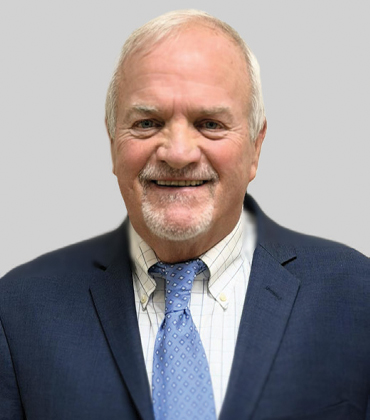
Milton Beaver, Director of Maintenance, Lynden Air Cargo


IN FOCUS

Optimizing Airfield Operations with Progressive Bird Mitigation Solution
Airport bird control services are evolving through technology-driven, integrated strategies that enhance aviation safety, operational efficiency, and environmental responsibility.

Aircraft Maintenance Solutions: Engineering Expertise and Fleet Readiness
Aircraft maintenance services ensure safety, reliability, and efficiency through skilled expertise, digital tools, regulatory compliance, predictive analytics, and continuous innovation.
EDITORIAL
The Infrastructure behind Safe and Reliable Flights
Aviation reliability begins long before an aircraft reaches the runway, supported by maintenance precision, operational cleanliness, wildlife control, and logistical continuity. In this edition of Transportation Review, we examine the essential services sustaining aviation performance behind the scenes.
Our cover story recognizes Leading Edge as Top Aircraft Maintenance Service 2026 for its disciplined approach to general aviation maintenance. Founded in 2021, the company delivers mobile and in-hangar maintenance across the Oklahoma City region, establishing credibility through responsiveness, convenience and consistent technical execution; ensuring aircraft returned to service meet strict safety and reliability benchmarks.
Elite Bird Management is named Airport Bird Control Services Company of the Year 2026. From hangars to terminals, the company addresses the risks birds pose to airports through customized exclusion strategies, strong regulatory expertise and disciplined execution, ensuring safer facilities, protected aircraft and uninterrupted operations across aviation sites.
Recognized as Top Aircraft Cleaning and Washing Services 2026, Air to Ground Services approaches aircraft cleaning as a structured operational requirement rather than a cosmetic task. With more than twenty-five years of industry experience, the company aligns cleaning programs with inspection readiness, corrosion prevention, and maintenance accessibility.
In the logistics domain, Solomon & Sons Relocation Services is named Top Moving and Storage Services 2026. Founded in South Florida, the company operates through a fully in-house relocation model that manages each move from planning through delivery without subcontractors, reinforcing accountability and service consistency.
Industry leaders featured in this issue offer valuable perspectives. Robert Benefield, Manager of Maintenance Training at CommuteAir, reflects on how evolving aircraft systems have reshaped technician training over three decades. Complementing this, Milton Beaver, Director of Maintenance at Lynden Air Cargo, discusses avionics modernization for the company's Lockheed L-382G fleet, citing rising repair costs and parts scarcity as key drivers.
Together, these insights reinforce the idea that aviation reliability depends on disciplined operational services that sustain safe and efficient flights.
